Succulents Leaves Turning Yellow: Causes & Easy Fixes
Seeing yellow leaves on your succulent is alarming, but this common issue is almost always reversible once you identify the root cause. Below are the most frequent reasons succulent foliage turns yellow, plus step-by-step solutions to bring your plant back to health.
1. Overwatering (The #1 Cause of Yellow Succulent Leaves)
Signs
- Bottom leaves turn pale yellow, soft, mushy and translucent
- Leaves drop off easily when touched
- Soil stays damp for days; pot has standing water
- Roots smell rotten or look brown/black
Fixes
- Stop watering immediately and move the succulent to a bright, well-ventilated spot to dry soil completely.
- Gently remove the plant from its pot and cut away all mushy, rotten roots with clean scissors.
- Let the bare root system air-dry for 1–3 days to form a protective callus.
- Repot into fresh, fast-draining succulent grit mix in a pot with drainage holes.
- Resume light watering only after the entire soil mass dries out fully.
2. Underwatering & Severe Dehydration
Signs
- Yellow, wrinkled, thin leaves that feel dry and crisp
- Older lower leaves yellow first as the plant sacrifices them to save water
- Soil is bone-dry deep down for weeks
Fixes
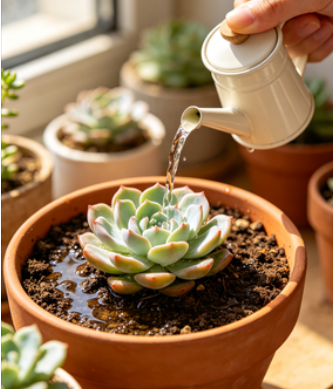
- Give a deep, thorough soak until water flows out the pot’s drainage holes.
- Repeat the full soak-and-dry watering cycle regularly.
- Mist lightly between waterings if you live in an extremely dry climate.
3. Insufficient Sunlight / Etiolation
Signs
- Pale lime-yellow stretched growth with wide gaps between leaves
- New leaves stay small and faded; the whole plant leans toward light
- No bright pigment or red/pink leaf tips even in growing season
Fixes
- Gradually increase light exposure over 7–10 days to avoid sunburn. Start with morning indirect sun, then add more direct light.
- Move indoor succulents to a south-facing window or use a full-spectrum grow light for 6–8 hours daily.
- Thin out overcrowded foliage to let light reach inner and bottom leaves.
4. Nutrient Deficiency
Signs
- Uniform pale yellow across all leaves, slow new growth
- No mushy texture; leaves stay firm but lose vibrant color
- Succulent has lived in the same depleted soil for over 2 years
Fixes
- Feed with diluted low-nitrogen cactus/succulent fertilizer once per month in spring and summer.
- Repot into fresh nutrient-balanced succulent mix every 1–2 years to replenish minerals.
- Avoid heavy nitrogen fertilizers, which trigger soft yellow growth prone to rot.
5. Sunburn from Sudden Intense Heat
Signs
- Bright yellow or brown scorched blotches on leaves facing direct midday sun
- Only the exposed outer leaves turn yellow; inner foliage stays green
Fixes
- Move the plant to partial shade during peak noon heat.
- Acclimate succulents slowly to full sunlight instead of sudden outdoor placement.
- Add a sheer curtain to filter harsh indoor window light.
6. Natural Aging of Old Leaves
Signs
- Only the lowest, oldest single layer of leaves slowly turns pale yellow and dries up
- New top growth remains thick, green and healthy
- No mushy texture, rot or pests present
Fixes
This is a harmless natural process. You can gently pluck fully dried yellow leaves to tidy the plant, no extra care changes needed.
7. Pest Infestation (Mealybugs, Aphids)
Signs
- Spotty yellow discoloration across leaves, tiny white cottony spots or sticky residue
- Leaves weaken, curl and yellow as pests suck sap
Fixes
- Wipe pests off with rubbing alcohol on a cotton swab.
- Spray the whole plant with diluted neem oil weekly for 3–4 weeks to eliminate larvae.
- Isolate the infected succulent to stop pests spreading to other plants.
Quick Prevention Tips to Stop Yellow Leaves
- Stick to the soak-and-dry watering rule for all succulents.
- Always use gritty, fast-draining soil and pots with drainage holes.
- Match light levels to your succulent variety; most need 4+ hours of direct sun.
- Refresh soil every 1–2 years to prevent nutrient depletion and compaction.
- Inspect leaves monthly for early pest or rot warning signs.