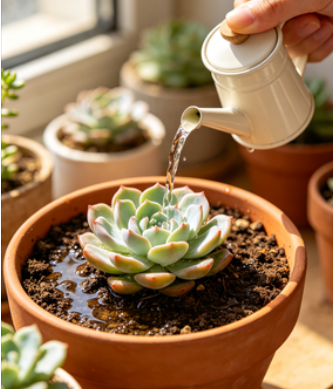
Leaf Propagation Method (Step-by-Step) – Example: Graptoveria ‘Titubans’
Step 1: Choose Healthy Mature Leaves
Select full, plump, and undamaged leaves from a healthy mother succulent. Avoid weak, yellowed, scarred, or pest-infested leaves. Gently twist the leaves sideways until they come off cleanly. A complete leaf base is essential for successful rooting and budding.
Step 2: Let the Leaves Callus Over
Place the freshly picked leaves in a dry, well-ventilated area with bright indirect light. Keep them away from direct sunlight. Leave the leaves to air dry for 3 to 7 days until the broken ends form a dry, thin protective callus. This step prevents rotting after contact with moist soil.
Step 3: Prepare Well-Draining Soil
Use loose, breathable, fast-draining succulent or cactus soil mix. For better rooting results, spread a thin layer of fine horticultural sand or vermiculite on top of the soil. This creates a clean, dry, and friendly surface for new roots to grow.
Step 4: Place Leaves on the Soil
Arrange the fully callused leaves evenly on the soil surface with the leaf facing upward and the base touching the soil. Leave enough space between each leaf and avoid overlapping, which reduces airflow and increases the risk of mold.
Step 5: Maintain Proper Environment and Wait
Put the pot in a bright, airy location with indirect sunlight. Keep the soil slightly moist but never soggy or waterlogged. Under ideal temperature and humidity conditions, tiny new buds and fresh roots will grow from the leaf base within 2 to 4 weeks.
Step 6: Transplant the New Succulents
Once the baby succulents develop 3 to 4 mature leaves and grow a stable root system, they are ready for transplanting. Carefully separate the new plants and move them into individual pots with fresh succulent soil. From this point, you can treat them as independent mature succulents and follow regular care routines.